Office Furniture Buying Guide for Businesses: Manufacturer or Supplier?
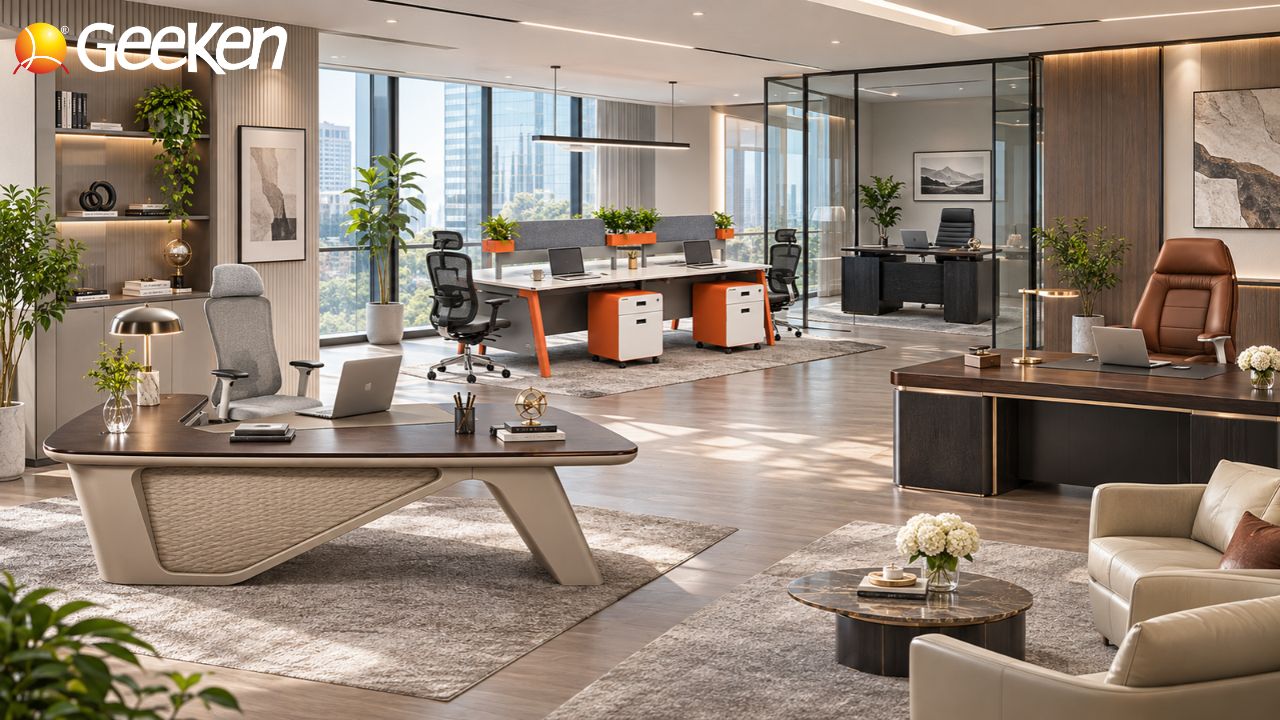
There is a familiar moment during an office setup when the excitement of the new space meets the reality of procurement. Someone has to decide where the desks, chairs, workstations and storage will come from. Should the company approach a manufacturer directly or work through a supplier or dealer? The answer depends less on labels and more on the size, complexity and priorities of the project.
First, Understand What You Are Actually Buying
Office furniture is rarely just a collection of individual products.
Suppose a company is moving 120 employees into a new office in Gurgaon. It needs workstations, task chairs, manager tables, meeting tables, storage, reception furniture and perhaps a few sofas for informal spaces.
Buying each item separately may appear flexible. But suddenly there are several vendors, different delivery schedules, different finishes and different service contacts.
That is when the difference between a manufacturer and supplier becomes meaningful.
An office furniture manufacturer in India generally makes the products or controls their production, while a supplier or dealer typically sources and sells products to customers.
Neither model is automatically right for every business.
When Does Buying From a Manufacturer Make Sense?
Direct manufacturer procurement can be particularly relevant for larger office projects.
If you are furnishing an entire floor, opening multiple branches or developing a consistent workplace design, you may need furniture in substantial quantities and specific configurations.
This is where manufacturing capability can matter.
For example, modular workstations may need to fit a particular floor plan. Desk sizes may need to work around columns or circulation areas. Colours and finishes may need to remain consistent across departments.
Geeken offers office furniture categories including seating, tables, workstations, storage and related workplace furniture, with its manufacturing operations based in the Delhi NCR region.
In such projects, dealing directly with a manufacturer can also make conversations around customisation and project coordination more straightforward.
And When Is a Supplier or Dealer More Practical?
Now consider a smaller company.
A startup has 15 employees and needs eight additional chairs, a few desks and some storage. It isn't redesigning an entire workplace.
In this situation, an office furniture supplier in Delhi NCR or an office furniture dealer in Gurgaon may offer the flexibility the business needs.
Suppliers can also be useful when a company wants to compare products from different manufacturers or needs readily available furniture rather than customised pieces.
So, rather than asking which option is “better”, ask what kind of procurement problem you are trying to solve.
Don't Underestimate the Office Chair
Employees may spend seven, eight or more hours around their workstation. The chair therefore deserves more thought than its position on the purchase order might suggest.
When evaluating an office chair manufacturer in Gurgaon, look at:
Seat dimensions
Back support
Adjustability
Armrests
Mechanism
Upholstery or mesh
Base and castors
Warranty
Availability of replacement parts
A chair that looks impressive in a showroom may not necessarily be comfortable for every employee.
Likewise, the cheapest chair isn't necessarily economical if mechanisms begin failing within a short period.
Tables and Workstations Need Equal Attention
An office table has to work with the people and equipment around it.
Think about monitor placement, laptops, cables, storage, legroom and circulation. In an open-plan office, workstation dimensions can also influence how efficiently the available floor area is used.
Geeken's office furniture range includes office tables, workstations, meeting tables and other workplace solutions, with options for modular and customised workplace requirements.
When comparing an office table supplier in Delhi NCR, therefore, don't look only at the tabletop finish. Ask what sits underneath it - literally and operationally.
The Questions You Should Ask Every Vendor
Whether you speak to a manufacturer or supplier, ask the same basic questions.
What is included in the quotation?
Delivery? Installation? GST? Site measurement? Customisation?
What happens after installation?
Find out about warranty and service support before you need it.
Can you maintain consistency for future purchases?
This matters for companies that are likely to expand. Buying another 30 workstations six months later becomes easier if the same configuration can be reproduced.
What is the realistic delivery timeline?
A beautiful workstation arriving three weeks after employees have joined the office isn't particularly useful.
A Simple Way to Decide
A manufacturer may be worth considering when you:
Are furnishing a medium or large office
Need significant quantities
Want customised furniture
Need consistent finishes across a project
Require project-level coordination
A supplier or dealer may be more suitable when you:
Need smaller quantities
Want to compare several brands
Need readily available products
Have limited customisation requirements
There is also nothing wrong with getting quotations from both. In fact, for a significant office project, doing so can give you a much clearer picture of what you are actually paying for.
Frequently Asked Questions
Q1. Is an office furniture manufacturer always cheaper than a supplier?
Not necessarily. The final cost depends on quantity, specifications, customisation, logistics, installation and service. A direct manufacturer quotation may be advantageous for larger projects, but it should be compared on total project cost.
Q2. How do I choose an office furniture manufacturer in Delhi NCR?
Look at manufacturing capability, product quality, customisation options, delivery capacity, warranty and after-sales service. Ask for detailed specifications rather than comparing only the headline price.
Q3. When should a business choose an office furniture dealer in Gurgaon?
A dealer can be practical for smaller requirements, quick replacements or situations where you want to compare products from multiple brands. Larger projects may benefit from evaluating direct manufacturer options as well.
Conclusion
Office furniture is one of those purchases that looks simple until the project gets underway.
Once you factor in floor plans, employee comfort, quantities, installation, timelines and future expansion, the choice between a manufacturer and supplier becomes much more nuanced.
For a large office setup, an office furniture manufacturer in Delhi NCR may offer useful advantages in terms of coordination and customisation. For smaller or more flexible purchases, a supplier or dealer may work well.
The sensible approach is to define the requirement first. Then compare vendors against it.
That small change in the buying process can save a surprising amount of time - and several procurement headaches later.
Copyright ©2026 Geeken. All Rights Reserved.