How to Compare Hospital Stretcher Specifications Before Procurement
The ₹18 Lakh Stretcher Procurement That Failed Certification
A 150-bed hospital in Faridabad procured 30 stretchers from a trader-importer at what appeared to be a competitive per-unit price. Six months after installation, two issues emerged simultaneously: hydraulic height adjustment mechanisms began failing under daily use loads, and the stretchers failed to meet the bed clearance specifications required for their new MRI suite.
Replacement and modification costs: ₹18 lakh. The stretchers were not defective by general standards - they simply weren’t specified correctly for the clinical environment they were placed in.
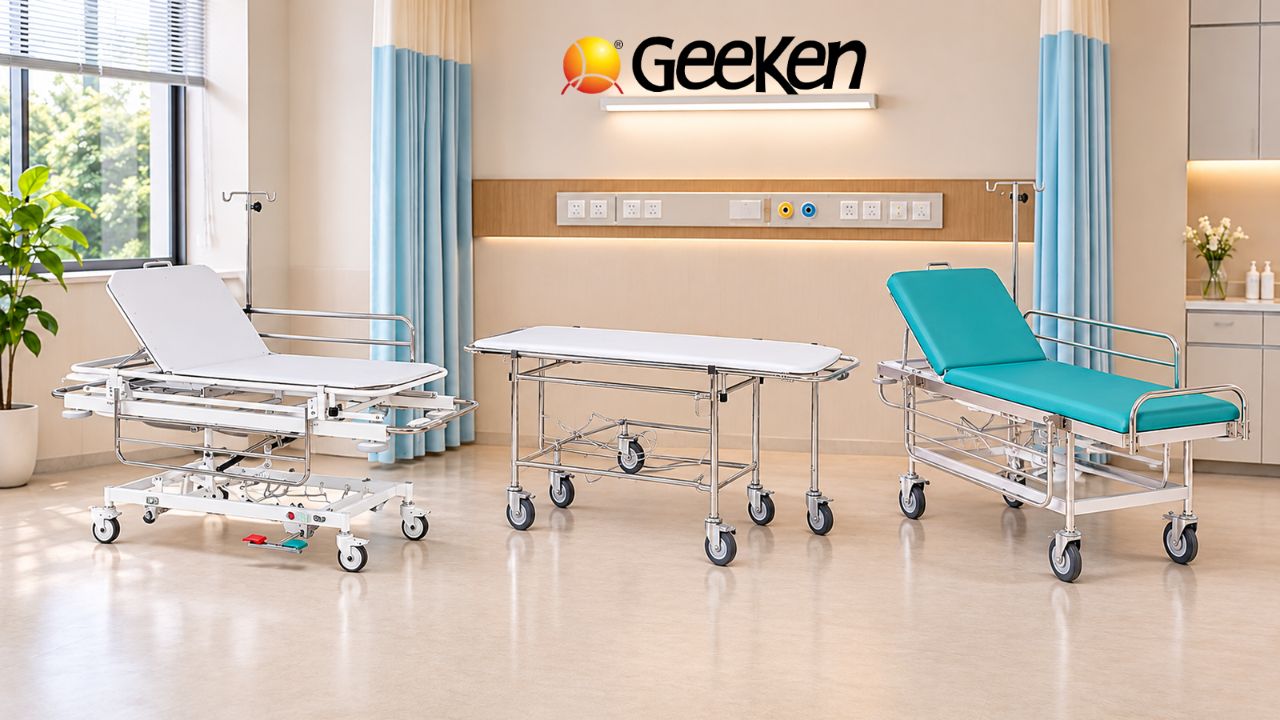
Hospital stretcher procurement is a technical exercise, not a commodity purchase. As Hospital furniture manufacturers in Delhi with extensive healthcare project experience, here’s how to compare specifications before a single purchase order is signed.
1. Load Rating: The Number That Cannot Be Assumed
The first specification to verify on any healthcare stretcher is static load rating.
Standard clinical environments require a minimum 200 kg static load rating for patient transport stretchers. ICU and bariatric environments require 250–350 kg. Emergency rooms handling diverse patient populations should specify to 250 kg minimum.
Healthcare stretcher manufacturers publish load ratings - but verify whether the published rating is for the frame alone or the complete assembly including mattress platform and side rails. These are different numbers, and conflating them is a common procurement error.
As Hospital furniture manufacturers in Gurgaon, we manufacture stretchers to 230 kg standard and 350 kg bariatric specifications, both with third-party load test documentation available before procurement.
2. Height Adjustment Range and Mechanism Type
Clinical environments require specific height ranges for different applications:
Patient transport: 550mm–750mm working height range. Lower positions for patient transfers from floor level; higher positions for comfortable clinician working height.
Emergency and procedure stretchers: 450mm–950mm range. Extended range accommodates both floor-level access and procedure positioning without requiring separate equipment.
Height adjustment mechanisms for hospital stretcher dealers to document clearly:
Manual hydraulic: Foot-operated pump. Reliable, no power dependency, standard for general ward and transport use. Requires 15–20 pump strokes for full height traversal.
Electric hydraulic: Motorised height adjustment. Standard for ICU, procedure, and imaging-adjacent environments where precise and rapid positioning is required.
Central locking castors: All four castors lock simultaneously from a single foot pedal. Non-negotiable for any stretcher manufacturer in Gurgaon or Delhi supplying procedure environments.
Verify mechanism service accessibility. The most common stretchers failure mode is hydraulic seal degradation - a serviceable seal design reduces repair cost and downtime significantly versus sealed-unit replacements.
3. Frame Material and Corrosion Resistance
Hospital environments expose furniture to disinfectants, body fluids, and repeated cleaning cycles. Frame material determines lifespan more than any other structural decision.
Stainless steel (304 grade): Premium corrosion resistance. Appropriate for operating theatres, procedure rooms, and high-spill clinical environments. Higher initial cost, 15+ year lifespan under institutional use.
Mild steel with electrocoat primer + powder coat: Standard for general ward and transport stretchers. Quality dependent on pretreatment process - 9-stage phosphate pretreatment provides adequate clinical corrosion resistance. 7–12 year lifespan with proper maintenance.
Aluminium alloy: Lightweight advantage for transport stretchers. Lower corrosion resistance than stainless steel in chemical-heavy environments.
When comparing healthcare stretcher suppliers, request coating process documentation - not just material specification. A mild steel stretcher with 9-stage pretreatment outlasts a stainless steel stretcher with inadequate surface preparation in clinical chemical environments.
4. Mattress Platform and Side Rail Specifications
Mattress platform:
Minimum 1,900mm × 600mm usable surface for adult patients
Radiolucent platforms (carbon fibre or specific polymer grades) for imaging-suite stretchers - verify compatibility with your specific imaging equipment before procurement
Anti-bacterial surface material (seamless PU or ABS) - no fabric or sewn upholstery in clinical environments
Side rails:
Folding side rails: minimum 300mm height above mattress surface
One-hand operation release mechanism
Load-tested for lateral patient support (minimum 80 kg lateral force)
Stretcher manufacturers in Delhi supplying imaging environments must document radiolucency certification for each model. This is non-transferable between models - a radiolucent certification on one frame doesn’t apply to a different frame specification.
5. Procurement Documentation Checklist
Before finalising any stretcher order, require these documents from your stretcher manufacture in Gurgaon or Delhi supplier:
Load test certification (static and dynamic, third-party)
Coating pretreatment process documentation
ISO 13485 compliance (medical device manufacturing system)
Castor load rating documentation
Radiolucency certification (if applicable)
Spare parts availability commitment (minimum 7 years)
Warranty terms: minimum 3 years structural, 1 year hydraulic
FAQs
What’s the key difference between transport stretchers and procedure stretchers?
Height range and platform specification. Transport stretchers prioritise manoeuvrability and ease of patient transfer - typically 550–750mm range, standard platform. Procedure stretchers require extended height range (450–950mm), radiolucency options, and Trendelenburg/reverse Trendelenburg positioning. Hospital furniture manufacturers in Delhi serving both functions manufacture these as distinct product lines, not configuration variants of a single model.
How do I verify a stretcher manufacturer’s load rating claims?
Request third-party load test documentation from an accredited testing laboratory - not internal test reports. Established healthcare stretcher manufacturers provide this as standard. Hospital stretcher dealers sourcing from unverified manufacturers frequently cannot produce independent test documentation.
What is the typical lead time for custom-specification hospital stretchers in Delhi NCR?
Standard specification stretchers from established Hospital furniture manufacturers in Gurgaon like Geeken: 3–4 weeks from order confirmation. Custom specifications (bariatric, radiolucent platforms, extended height range): 5–7 weeks. Stretcher manufacturers in Delhi with integrated manufacturing - not trader networks - can commit to these timelines with production documentation.
Copyright ©2026 Geeken. All Rights Reserved.