Hospital Waiting Area Seating: Comfort, Capacity and Maintenance
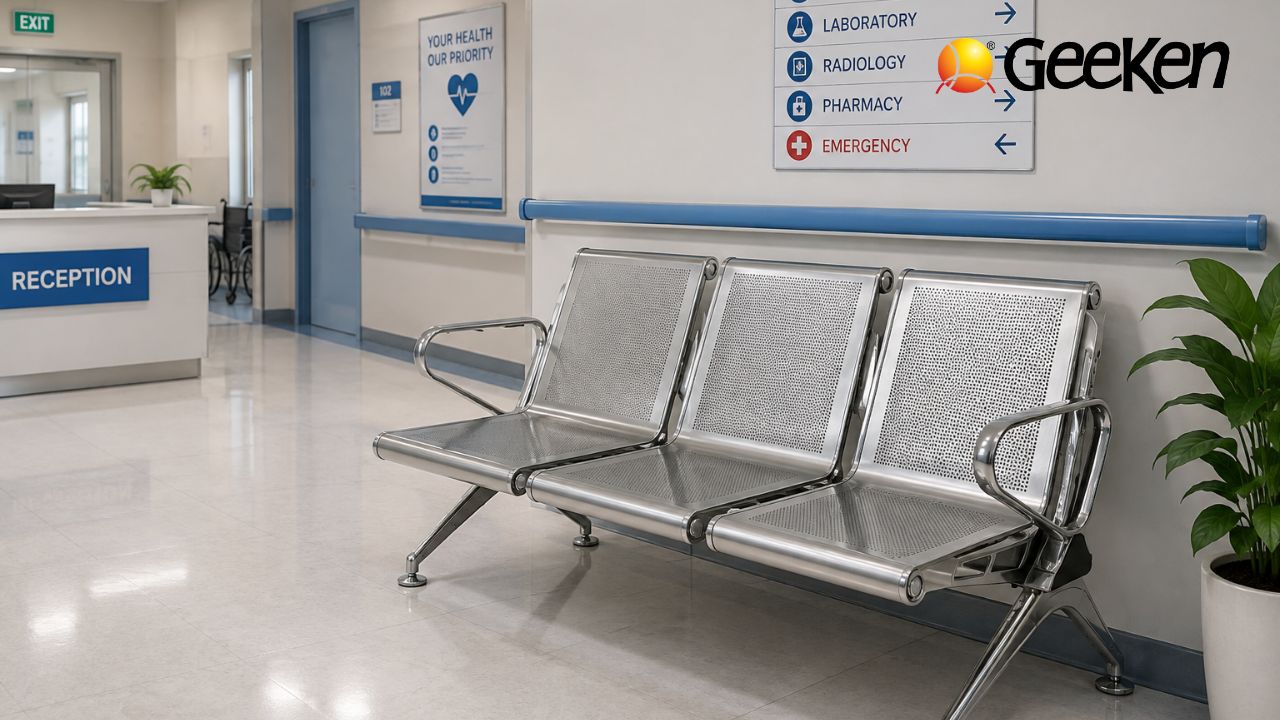
Eleven months. That's how long it took a multi-specialty hospital in Lajpat Nagar, Delhi to destroy 40 reception chairs.
Not careless use. Not vandalism. Just 2,000 visitors a day doing exactly what visitors do—sitting, waiting, spilling, shifting. The fabric soaked up liquid. It ripped. Bacteria found a home in the weave and didn't leave. Internal hygiene audits failed. The hospital paid ₹4,80,000 for replacement, re-upholstery, and downtime.
The procurement team hadn't bought bad furniture. They'd bought the wrong furniture entirely—domestic-grade seating dropped into a clinical environment that would stress-test it every single hour of every single day.
Hospital waiting rooms don't forgive poor decisions. Benches carry static loading for over 18 hours daily. They get disinfected with harsh chemicals every two hours. They're touched by hundreds of people who are already unwell, anxious, or exhausted. As an experienced healthcare furniture manufacturer, I've seen what this environment does to under-specified seating—and it's not pretty.
1. Material Hygiene and Infection Control
Let's be direct about fabric upholstery in high-traffic clinical settings: it doesn't belong there.
It absorbs liquid spills. It harbours bacterial strains like staphylococcus. It breaks down under chlorine-based disinfectants faster than anyone's maintenance budget can keep up with. Three separate failure modes in one material choice.
When selecting a reliable hospital furniture manufacturer in Delhi, the conversation should start with non-porous materials:
High-grade perforated cold-rolled steel
Anti-microbial powder coating
Heavy-duty seamless polyurethane (PU) padding
Smooth, stitch-free surfaces leave nowhere for fluid to collect. Powder-coated steel handles hospital-grade sodium hypochlorite without rusting or peeling at welded joints—even with daily floor washing at close range.
Material Performance Comparison
2. Structural and Engineering Capacity for Beam-Mounted Seating
Picture a busy government hospital OPD on a Monday morning. Families arriving with elderly parents, some carrying luggage, a few patients using crutches or wheelchairs. Every seat occupied. Some people perching on armrests.
Conventional household seating collapses under that reality—sometimes literally.
Heavy-duty visitor benches need to be built differently from the ground up:
Continuous central beam construction
2mm thick steel tubing
Reinforced leg supports
Even weight distribution across every seat
This applies whether you're specifying a 2 seater visitor bench for hospital, a three seater visitor bench, or a four seater visitor bench. Each seating position should hold a minimum static load of 135 kg. A four-seater bench needs to safely carry approximately 540 kg combined—without any structural deflection. Not approximately. Not most of the time. Every time.
3. Ergonomics for Long Waiting Hours
Forty-five minutes. Sometimes two hours. That's how long patients and visitors typically wait during hospital visits—and they're already stressed before they sit down.
Flat 90-degree metal benches make everything worse. They create pressure points beneath the thighs, restrict circulation, and force people to shift constantly trying to find comfort that doesn't exist in the design.
The best visitor benches in India are built around what bodies actually need during extended waiting:
105-degree lumbar recline angle
Waterfall seat edges
Individual armrests between seating positions
Armrests deserve special attention. For elderly patients, pregnant women, and anyone recovering from surgery or injury, getting up from a seat without an armrest isn't inconvenient—it's genuinely difficult and sometimes painful. Built-in armrests reduce that strain without any additional cost to the hospital.
4. Total Cost of Ownership & Local Manufacturing
Here's something I've seen repeated more times than I can count: a hospital procurement committee selects imported seating because the per-unit price looks attractive. Six months later, rust spots appear at the welded joints. The powder coating is already failing because the pretreatment process was cut short somewhere in the supply chain.
Some hospital furniture dealers in Gurgaon supply unverified imported stock that looks identical to quality-manufactured products—until it's been exposed to daily floor washing and disinfectant for a few months.
Working directly with a recognised hospital furniture manufacturer in Delhi or trusted hospital bed suppliers in Delhi NCR means access to manufacturing processes that actually hold up. Automated nine-tank phosphating pretreatment, for instance, chemically bonds powder coating to steel at a molecular level. It's not a cosmetic finish—it's corrosion resistance built into the structure.
And when something does need replacing—an armrest, a beam clamp, a floor glide—a locally manufactured hospital visitor bench in Delhi means that part arrives within 24 hours. Not three weeks from an overseas supplier who may or may not have it in stock.
Why Choosing the Right Hospital Seating Matters
Hospital visitor seating touches every dimension of operations: infection control, patient comfort, maintenance expenditure, furniture lifespan, operational efficiency, and visitor experience. Getting it right the first time costs less—always—than the cycle of replacement, downtime, and emergency procurement that follows getting it wrong.
Frequently Asked Questions
1. What is the optimal seating layout for narrow hospital corridors? A three seater visitor bench against the wall gives you the best balance between capacity and circulation. Pair it with a 2 seater visitor bench for hospital and backless beam seating in tighter spots—you get more seats without blocking movement through compact triage areas.
2. How do hospital disinfectants affect seating durability? Standard enamel-coated furniture degrades fast under medical disinfectants. A specialised healthcare furniture manufacturer finishes seating with electrostatic anti-microbial powder coatings that handle repeated alcohol and bleach-based cleaning without peeling or corroding—that's the specification to ask for before signing any purchase order.
3. What should hospitals evaluate when selecting furniture manufacturers in Delhi NCR? Direct manufacturing capability matters most. Beyond that: ISO and BIFMA certifications, nine-tank anti-corrosion pretreatment, spare parts availability, and local service infrastructure. Hospital furniture dealers in Gurgaon backed by real factory operations will always outperform trade-only suppliers on long-term support.
Copyright ©2026 Geeken. All Rights Reserved.