Hospital Bed Buying Guide: Types of Hospital Beds and Their Uses
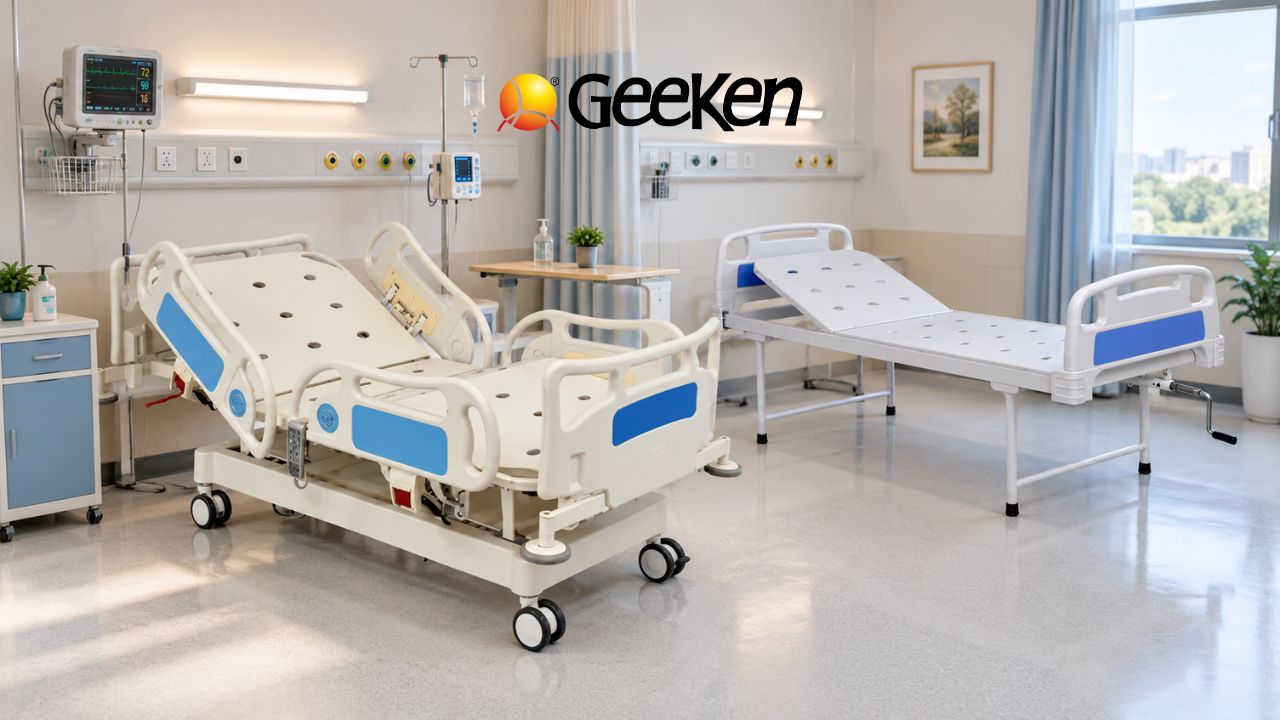
When a hospital is being set up, there is usually a long list of equipment to think about. Medical devices, monitors, operation theatre equipment, furniture, storage - the list seems endless. Hospital beds can sometimes get treated as a straightforward purchase. They aren't. The right bed has to suit the patient, the caregiver, the ward and the everyday realities of healthcare operations.
Start With the Kind of Care You Provide
Imagine a hospital administrator in Delhi preparing a new 50-bed facility.
The quotation for one hospital bed looks attractive. Another model costs more. At first glance, the difference may seem difficult to justify.
Then the actual questions begin.
Will the bed be used in a general ward or ICU? Does the patient need frequent repositioning? How easily can nurses adjust it? Can the bed be moved quickly if required? What happens when a component needs replacement?
These are the questions that make hospital-bed procurement more than a simple price comparison.
Before approaching a hospital bed manufacturer in Delhi, start by identifying where each bed will be used. A general ward, ICU, paediatric unit and recovery area can have very different requirements.
Geeken's healthcare and institutional furniture portfolio includes furniture solutions intended for healthcare environments, alongside its wider institutional range.
Understanding the Main Types of Hospital Beds
Manual Hospital Beds
A manual hospital bed uses mechanical controls, generally operated through hand cranks, to adjust sections of the bed.
For general wards, clinics, nursing homes and certain long-term care environments, this straightforward design can be perfectly practical.
There is also something reassuring about simplicity in a busy healthcare setting. Fewer electrical components can mean fewer things to troubleshoot, although the suitability of the bed ultimately depends on the patient's needs.
Fowler and Semi-Fowler Beds
Fowler beds allow the upper section of the bed to be raised, helping patients sit in a more comfortable position for activities such as eating, reading or resting.
These beds can be useful in general patient-care areas where some positioning flexibility is required but the full functionality of an ICU bed may not be necessary.
ICU Beds
An ICU is a different environment altogether.
Here, the bed becomes part of a larger care system. Positioning, mobility, access for medical equipment, side rails and emergency requirements become much more important.
If you are looking for an ICU bed supplier, don't compare models purely by the number of features listed in the brochure. Ask whether those features actually correspond to the clinical requirements of your ICU.
Paediatric Beds
Children require a different approach to furniture.
A peditric bed - more commonly written as paediatric bed - needs to account for children's size, movement and safety. Appropriate dimensions and secure side protection are particularly important.
A smaller adult bed isn't automatically a suitable children's bed.
What Should You Check Before Buying?
This is where a conversation with a hospital bed supplier should become detailed.
Ask about:
Frame construction and load capacity
Mattress dimensions and compatibility
Side rails and locking mechanisms
Castor quality and braking
Adjustment mechanisms
Ease of cleaning and disinfection
Availability of spare parts
Warranty coverage
Installation requirements
Expected maintenance
Delivery timelines
One detail that buyers sometimes overlook is movement.
A bed may spend most of its life beside a patient's wall, but hospital staff still need to move it through corridors, between rooms and occasionally into emergency areas. Castors and brakes therefore deserve as much attention as the visible finish.
Manufacturer or Dealer: Which Route Makes Sense?
There is no universal answer.
A hospital bed manufacturer can be useful when a hospital is purchasing in volume or requires particular configurations. Direct discussions may also make it easier to understand construction, customisation and service arrangements.
On the other hand, hospital bed dealers in Gurgaon and other local suppliers may be useful when a healthcare facility needs readily available products or wants to compare different options.
For larger projects, look beyond the initial quotation.
Ask who will install the beds. Where will replacement components come from? Who handles service complaints? How quickly can the supplier respond if several beds develop an issue at the same time?
A lower purchase price does not always translate into a lower operational cost.
Think About the Ward, Not Just the Bed
The bed has to work within the room around it.
Before finalising an order, check doorway widths, room dimensions, corridor movement and space around the bed. Consider whether nurses can comfortably access both sides and whether additional equipment can be accommodated.
This becomes particularly important when purchasing from hospital bed suppliers in Delhi NCR for a new facility, because a small dimensional mismatch can become an everyday inconvenience once the ward is operational.
Frequently Asked Questions
1. What type of hospital bed is suitable for a general ward?
A manual, Fowler or similar adjustable bed can be suitable depending on the patient's needs and the hospital's clinical requirements. The choice should be based on functionality, safety and expected usage.
2. What is the difference between an ICU bed and a manual hospital bed?
An ICU bed is generally designed to provide more positioning, mobility and patient-care functionality for intensive-care environments. A manual bed has a simpler mechanical adjustment system and may be appropriate for general care.
3. What should I ask hospital furniture suppliers before placing an order?
Ask about construction, specifications, warranty, spare parts, installation, maintenance and after-sales service. Also confirm delivery timelines and whether the supplier can support the required quantity.
Conclusion
Buying hospital beds is one of those decisions where the catalogue tells only part of the story.
The more useful question is not simply, “Which bed costs less?” It is, “Which bed will work reliably in the environment where it will be used?”
Whether you are comparing a hospital bed manufacturer in Delhi, an ICU bed supplier or a broader healthcare furniture manufacturer, start with the actual requirements of your wards. Once those are clear, comparing products becomes considerably easier.
A good hospital bed should quietly do its job every day. That reliability is what ultimately matters.
Copyright ©2026 Geeken. All Rights Reserved.