Height-Adjustable Table vs Fixed Office Table: Which Is Better?
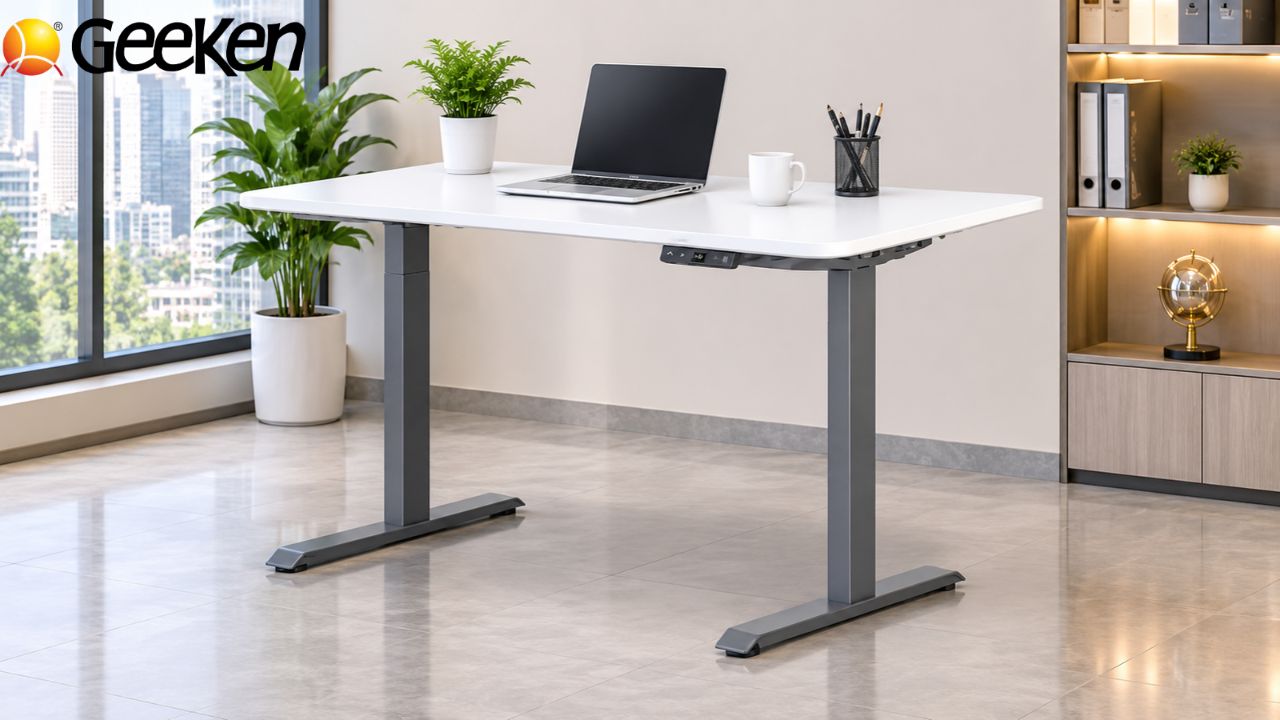
A height-adjustable table offers flexibility that a fixed office table cannot, but that does not mean every employee or workspace needs one. The right choice depends on working style, budget, ergonomics, space and the organisation's approach to workplace flexibility. For many offices, a combination of adjustable and fixed desks can deliver the best balance.
What Is a Height-Adjustable Table?
A height adjustable table allows the user to change the working height, typically so they can alternate between sitting and standing.
A fixed office table remains at one predetermined height.
The difference sounds simple.
Operationally, however, it can affect employee comfort, workstation planning and workplace flexibility.
Why Sit-Stand Desks Are Gaining Attention
Employees increasingly spend long periods at desks.
A sit-stand arrangement gives users the option to change posture during the workday rather than remaining in one position continuously.
However, it is important not to treat standing as a replacement for sitting.
The real value lies in movement and adjustability.
A height adjustable desk supplier should therefore be able to explain the adjustment range, mechanism, load capacity and intended usage—not simply call the product ergonomic.
Benefits of Height-Adjustable Tables
Flexibility
Different users can set the desk according to their preferred working position.
Shared Workstations
If employees of different heights share desks, adjustability can be particularly useful.
Modern Workplace Planning
Height-adjustable desks can fit well within flexible or activity-based office environments.
Posture Variation
Users can change between sitting and standing positions during the day.
Geeken's adjustable workstation portfolio includes electrically adjustable solutions designed for sit-stand use. (geeken.in)
Why Fixed Tables Still Make Sense
Fixed tables have an important advantage:
Simplicity.
They typically cost less and have fewer moving components.
For meeting rooms, reception areas, training rooms and standardised workstations, fixed tables may be entirely appropriate.
If an employee has a well-fitted chair and desk setup, a fixed table can still support a comfortable working environment.
Cost Matters at Scale
Suppose an organisation has 500 employees.
Providing an adjustable desk to every person can significantly increase the furniture budget.
That does not mean adjustable desks are a bad idea.
Instead, consider where they provide the most value.
For example:
Adjustable: Shared workstations, senior employees requesting flexibility, innovation areas
Fixed: Meeting rooms, training areas, standardised departments
This can create a sensible middle ground.
Evaluate the Mechanism
When comparing a height adjustable desk manufacturer, ask about:
Adjustment range
Motor type
Weight capacity
Stability
Noise
Control system
Power requirements
Warranty
Spare parts
The table should remain stable at different heights.
An unstable desk defeats the purpose of upgrading.
What About Custom Workstations?
For businesses with unusual layouts, customized office workstations can combine fixed and adjustable elements.
A manufacturer may be able to design workstation clusters around existing columns, electrical points or floor dimensions.
Geeken's workstation portfolio includes modular and adjustable configurations for different office layouts.
When Should You Choose Fixed?
A fixed table is usually sensible when:
Budget is tight
Workstations are permanently assigned
The office has conventional layouts
Users do not require frequent height changes
The tables are mainly for meetings or training
When Should You Choose Adjustable?
Choose adjustable where:
Employees share workstations
Flexible working is important
Height variation among users is significant
The organisation has an ergonomics-focused workplace strategy
Employees need posture variation
FAQs
Q1. Are height-adjustable desks better than fixed desks?
They offer more flexibility, but they are not automatically better for every workspace. The right choice depends on users, budget and working patterns.
Q2.Is a sit-stand desk suitable for every employee?
It can be useful for many employees, but individual preferences and work requirements vary. The desk should be easy to adjust and paired with an appropriate chair.
Q3.What should I check before buying an adjustable table?
Evaluate height range, stability, load capacity, adjustment mechanism, noise, power requirements, warranty and service.
Conclusion
The debate should not be “adjustable versus fixed”.
It should be:
Where does adjustability create enough value to justify the investment?
For shared, flexible or ergonomically focused environments, an adjustable desk can be a strong choice. For meeting rooms, training spaces and standard workstations, fixed tables may remain the more practical solution.
When comparing office table manufacturers, look for a supplier that can design the workplace around different table types rather than forcing one solution everywhere.
Copyright ©2026 Geeken. All Rights Reserved.