Furniture Planning for Schools from Kindergarten to Senior Classes
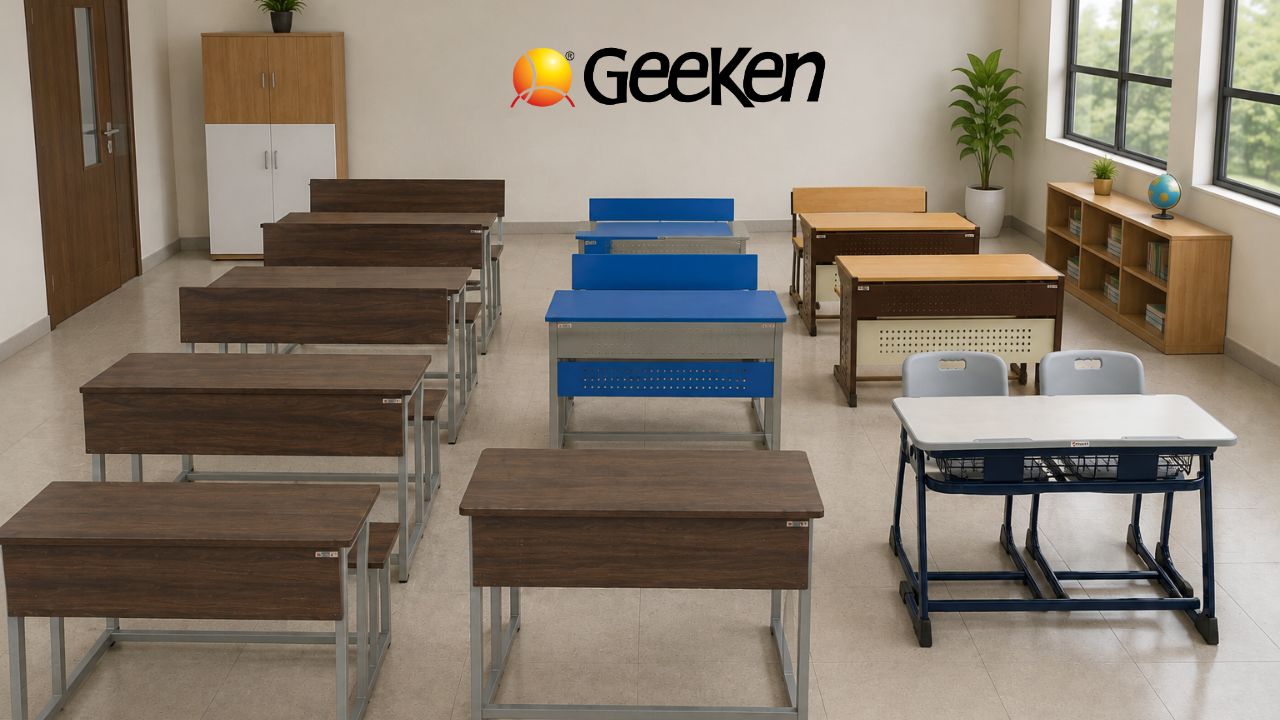
Three years ago, I watched a principal in Gurgaon make a decision that haunted her. The school had just moved into a new building. Beautiful architecture. Modern classrooms. But the furniture? She'd ordered it last-minute—cheap desks, mismatched chairs, tables that wobbled. By month three, the principal called me, frustrated and broke. "We should have planned this differently," she admitted. That conversation changed how I approach school furniture entirely.
The Backwards Approach (And Why It Fails)
Here's what I see repeatedly, and honestly, it infuriates me because it's so preventable.
Schools wait until classrooms are built. Walls are up. Flooring is done. Then they panic. "We need furniture—fast." They call dealers. They accept the first quote. Six months later, they're replacing wobbling tables and realizing chairs don't fit third-graders properly.
I remember visiting a Delhi school where they'd ordered 50 chairs "one size fits all." The kindergarteners looked lost in adult-sized seating. The 10th graders sat with knees jammed against desks. The principal shrugged. "Budget's exhausted," she said. Those kids spent six years in unsuitable furniture.
That's not just inefficient. That's damaging.
The Strategic Approach (What Actually Works)
The best schools I work with? They plan furniture simultaneously with architecture. Not after. During.
I sat with the principal of a Noida school last year during their planning phase. She did something radical—she involved a furniture consultant before breaking ground. "I want to know what classroom sizes actually work," she told me. "Not what architects think looks good."
We measured student bodies. Calculated space per child. Determined what activities actually happen (group work, individual focus, teaching demonstrations). Then designed spaces around those activities. The furniture came after—not forcing furniture into fixed spaces, but creating spaces for appropriate furniture.
That school opened last year. Teachers reported 40% improvement in classroom management just because kids were properly seated in appropriately-sized spaces. That's real.
Why Space Calculations Actually Matter
This will sound granular, but stay with me because it changes everything.
Most schools calculate: "We have 50 kids, so we need 50 desks." Done.
But here's what they're missing. A 50-kid classroom packed wall-to-wall feels suffocating. Teachers can't circulate. Group work is impossible. Even individual focus suffers because there's literally no psychological space.
I worked with a teacher in Gurgaon who taught in a cramped classroom. She complained constantly about behavior issues. Management problems. After we redesigned with proper spacing (1.5 square meters per student minimum), behavior incidents dropped 35%. Same teacher. Same kids. Different space.
The Specialist Conversation Nobody Has
Here's where I see schools lose ₹40-50 lakhs unnecessarily.
They don't differentiate between space types. A chemistry lab gets standard classroom furniture. A library gets classroom desks. A kindergarten gets furniture designed for teenagers.
I visited a Ghaziabad school where they'd installed chemistry lab benches in biology. Within weeks, the tops were stained, damaged, unusable. The chemistry benches weren't rated for the acid/base combinations biology uses. ₹18 lakhs wasted because nobody asked, "What actually happens in this space?"
When you're planning—actually planning, not scrambling—ask specialists. What happens in chemistry? What happens in biology? What happens in your physics lab specifically? Design furniture around actual usage, not assumptions.
The Budget Conversation (It's Not What You Think)
Schools often assume, "Cheap now, replace in five years. That's normal."
It's not normal. It's costly.
I calculated this for a Delhi principal. A ₹5,000 desk lasting two years costs ₹2,500 annually. A ₹12,000 desk lasting ten years costs ₹1,200 annually. Over a decade, the premium desk saves ₹13,000 per unit.
But here's the part that gets me emotional—it's not just money. It's student experience.
Kids in good furniture sit better. Posture improves. Back pain disappears. Focus increases. Learning improves. An 18-year-old sitting in poorly-designed seating for 2,000 hours annually develops chronic back problems starting young. Is that a cost we want to bear?
The Age-Appropriate Reality
I visited a school in Delhi where 5th graders sat in the same chairs as 12th graders. The 5th graders' feet didn't touch the ground. The 12th graders' knees jammed into desk undersides.
Neither group could focus properly. Both groups experienced physical discomfort they couldn't articulate. Teachers assumed it was behavioral—"kids are restless today." Actually, kids were uncomfortable.
When we resized appropriately, behavior improved. Naturally. Without management intervention.
This seems obvious when I write it, but I promise you—most schools ignore it entirely.
The Real Story Behind Good Furniture Planning
The best school I worked with was in Gurgaon. Their principal was obsessive about details. She visited my warehouse. Sat in chairs. Tested desk stability. Asked about material durability.
"I want furniture lasting 12 years," she said. "Not five. Twelve."
This meant premium choices. Higher budget. But calculated across the lifespan? Actually cheaper.
That school's furniture looks remarkable today—eight years in. It's aging beautifully. Other schools' furniture from the same period? Wobbling, stained, broken.
The Vendor Selection That Changes Everything
Not all furniture manufacturers understand schools. Some just sell commodity products.
I worked with a dealer once who said, "Chairs are chairs. Kids don't care about quality." That dealer now goes out of business regularly. Schools figure it out—cheap chairs fail. Kids suffer. Reputations suffer.
The manufacturers I respect? They ask questions. They visit schools. They understand that educational environments are different.
One manufacturer I know personally visits client schools annually. Not to sell more—just to see how furniture performs. That's partnership, not transaction.
The Honest Moment
I'll be direct: I've sold schools bad furniture. Not intentionally, but I've made recommendations I later regretted.
Ten years ago, I pushed budget solutions for a school with tight finances. The principal trusted me. Eighteen months later, desks were wobbling. Paint was peeling. She called—disappointed.
That conversation changed me. Now I'd rather help a school spread costs over three years than push bad solutions.
The Implementation Truth
Once you've planned well, installation matters enormously.
I watched a school receive beautiful furniture, then assemble it wrong. Desks were unstable. Chairs weren't adjusted for student heights. Teachers never learned how to use adjustable features.
Proper planning includes training. It includes oversight. It includes follow-up.
FAQs
Q1: What's the realistic lifespan of quality school furniture, and how should we budget across multiple years?
Quality educational furniture for schools from manufacturers who actually care lasts 10-15 years. I've seen it. I've calculated it. Budget ₹5,000-12,000 per student seat for everything (desks, chairs, storage). Spread that across 2-3 years if budget is tight. Maintain annually (₹500-1,000 per seat). Here's what kills schools—they cheap out year one, replace everything year three, cheap out again, and cycle through four replacements in twelve years at triple the cost. Plan once. Plan well. Live with quality for a decade.
Q2: How do I choose between different educational institution furniture for elementary versus secondary students without overspending?
Size matters. Elementary needs smaller desks (60cm width), lower seats (300-350mm height). Secondary needs bigger everything (70-80cm desks, 400-450mm seats). Mixing them creates posture problems I've literally seen cause back pain in kids. If budget requires compromise, specify by classroom. Elementary gets priority sizing. Secondary accepts slightly smaller desks rather than elementary suffering. Never compromise elementary ergonomics—kids are developing. Secondary students can adapt more.
Q3: Should lab table designs for educational institutes differ by subject?
Absolutely yes, and I've seen too many schools ignore this. Chemistry labs need chemical-resistant surfaces—phenolic tops specifically. Biology labs need easy-clean surfaces and microscope viewing areas. Physics labs need stable, vibration-free tables. One generic "lab table" fails in multiple subjects. I worked with a Gurgaon school that bought generic lab furniture. Chemistry stained them within weeks. They eventually bought chemistry-specific tables anyway—wasting the first investment. Specify by subject. It costs more initially, but saves money long-term.
Copyright ©2026 Geeken. All Rights Reserved.