Best Materials for Hospital Furniture: Durability & Hygiene Explained
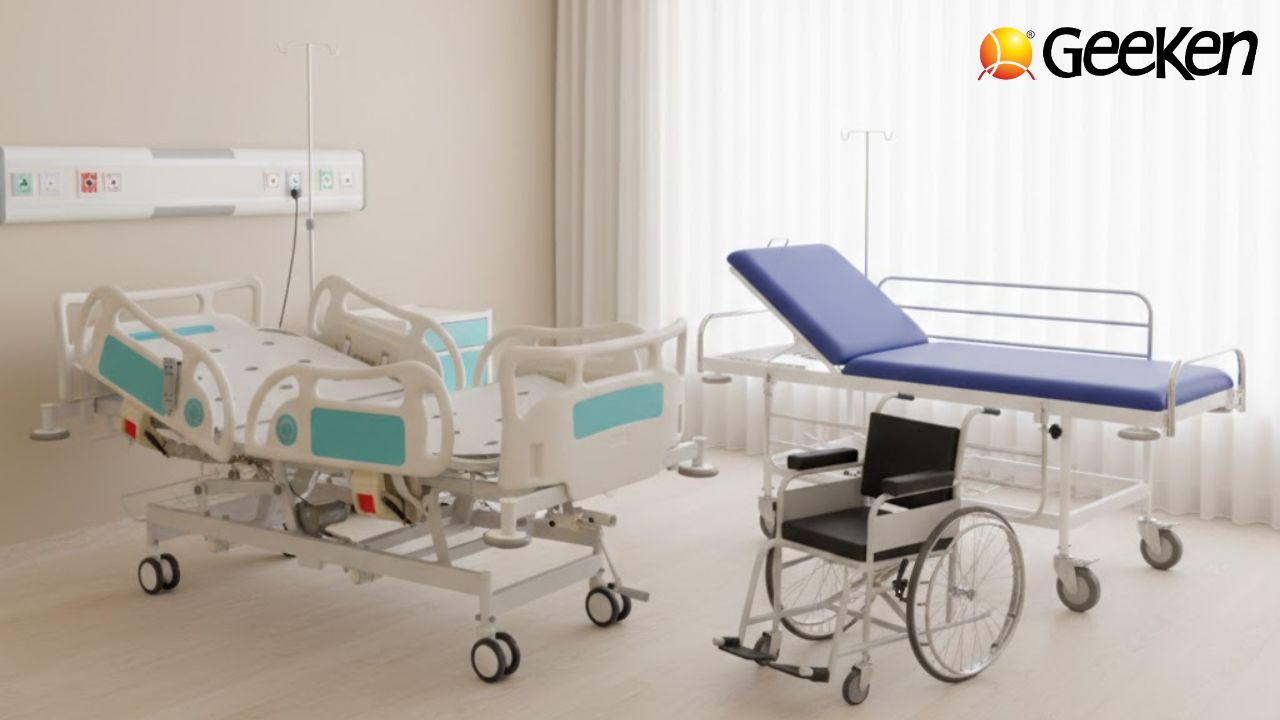
Furniture in contemporary healthcare environments is not only a functional tool. This has a direct impact on patient safety, infection control, staffing efficiency, and cost-efficiency over the long term. Through years of experience working alongside hospitals and professionals within the medical scene, one truth has remained constant: the material that hospital furniture is made up of is one of the defining features in how hygienic, practical, and durable it will be in real-life situations.
Why are we so fussy with our materials? Well, we want to see it as an integral part of the design process, not just a secondary decision (if made at all). Here, at Geeken, you will get how the material can drive you to a better design through a better material. In this guide, you will learn about the best materials used for hospital furniture today and the importance of this information with regard to healthcare environments.
Importance of Material Choice in Hospitals
Hospitals operate 24/7. Constant wear, need for frequent cleaning, disinfectants, body fluids, and heavy medical equipment exerts undue stress and performance degradation on furniture. Lower-grade materials won·t last long, break when stressed, or even become a perfect habitat for germs.
This is the reason why the top professional hospital furniture supplier gives priority to hygiene-supportive material without compromising on the structural strength that lasts for years.
The Role of Stainless Steel in Med Sofa Furniture
Though one of the most common materials used in healthcare. Its high non-porous nature inhibits the growth of microbes , is non-bleaching, and can be repeatedly sanitized without degradation. Because of corrosion resistance and heavy load carrying capacity many hospital beds suppliers use medical-grade stainless steel frames which make the bed stable even after years of intensive use.
Powder Coated Mild Steel Structure
Although stainless steel is a great option from a hygiene perspective, powder-coated mild steel will still be more commonly used in applications that require structural integrity. Powder coating, which can protect against rust and provide durability.
A dependable hospital furniture manufacturer in Delhi who knows how to compromise with the economy and performance provides powder coating frames in points where aesthetic attraction and strength of support comes in equal proportion.
Advanced Materials in ICU Environments
The material standards in critical care areas are uncompromising. ICU Beds are generally manufactured from high impact polymers, medical-grade plastics, and reinforced steel. These materials are selected based on high-order mechanisms, frequent adjustments and stringent infection control without compromising safety to the patient.
Plastics for Mobility and Hygiene
Today, more and more hospital furniture is made of medical-grade ABS and polypropylene plastics. They are low weight, easily cleanable, and resistant to chemical disinfectants. Many of the components of hospital beds are plastic such as side rails, control panels, head or foot boards and in an adjustable hospital bed. They improve patient comfort, while reducing the risk of mechanical and operator errors.
Affordable Luxury: Lounge Areas with Cleanliness
Due to the nature of waiting areas, furniture options are best chosen with comfort yet practicality in mind. Hospital waiting chair usually consists of molded plastic seats and metal frames. These make them easy to clean, keeps the fabric from soaking in bacteria and also ensures that the chairs maintain their shape and stability with continuous public usage.
Durable Seating for High-Footfall Zones
Hospitals have people flowing in and around within them at all hours of the day. Visitor Bench is an extremely common product, which is often made of powder-coated steel frames with perforated metal or molded seating surfaces. These materials provide for durability, easy maintenance, and high wear-resistance even in crowded hospital corridors and waiting lounges.
Electric Beds and Material Precision
Healthcare furniture driven by automation requires precision in materials. Inactive patients need help with mobility and use electric beds for patients, which comprise a combination of highly condensed steel structures to maintain motorized systems for moving parts, while insulated casings cover electric parts inside to ensure the safest and longest life span for the electric bed for patients. This includes ensuring material compatibility, as electrical systems must operate with the risk of exposure to moisture and other cleaning agents.
Engineering Excellence in ICU Automation
The electric ICU beds is a combination of metallurgical materials, intelligent equipment design, and engineering in high-dependency units. These beds need materials for complex motion, emergency positioning and attachment of heavy medical devices without vibration or failure. They have to be reliable in critical situations and that is why medical-grade metals and impact-resistant polymers are necessary in these cases.
Why would a comprehensive manufacturer be the ideal fit?
Selecting the right materials is not merely about sourcing, it is about knowledge. A reliable healthcare furniture manufacturer emphasizes this material assessment through hands-on usage in real healthcare domains rather than just laboratory use. Geeken adopts this strategy by creating furniture that is compliant with clinical requirements, infection control standards, and sustainable for long-term usage.
Geeken’s Commitment to Material Quality
At Geeken, we design and develop every product what can be used for years without any de-growth and safety purposes. The principles of a load-bearing capacity, endurance to disinfectants, cleaning, and the safety of the patient influence the choice of materials extensively. Geeken has integrated modern manufacturing technology under the health science domain which provides assured performance furniture across wards, ICUs and waiting areas.
Conclusion
The materials of hospital furniture directly impact the health of patients, the efficiency of staff, and the hygiene of the facility. Every choice in material signifies something too, from stainless steel frames to medical-grade plastics. By investing in high-quality materials, healthcare facilities can minimize maintenance costs, and more importantly build a safer, cleaner space for patients and caregivers to flourish. Hospitals can trust that their furniture will hold up for years of use and care with the right manufacturing partner behind them.
Frequently Asked Questions (FAQs)
Q1: Why hospital furniture is made of stainless steel?
A1: As a corrosion resistant metal, stainless steel also offers ease of disinfection, which are important for maintaining the hygienic standards practiced in hospitals.
Q2: Are plastic components safe in hospital?
A2: Medical-grade plastics are indeed manufactured to deter chemicals, inhibit bacterial growth, and promote patient safety.
Q3: What is the relationship between the quality of materials and long-term hospital costs?
A3: Use of quality material ultimately decreases the costs of repairs and replacement and the risks for infections, which saves a lot in the long run.
Copyright ©2026 Geeken. All Rights Reserved.